Overview
The haskap is a honeysuckle berry native to countries in the northern hemisphere such as Canada, Japan, and Russia. Haskap berries come from a rugged shrub that has the ability to thrive in northern climates.
The name Haskap was chosen as the brand name that has been applied to new varieties bread by the Fruit Program at the University of Saskatchewan in Saskatoon.
Taste
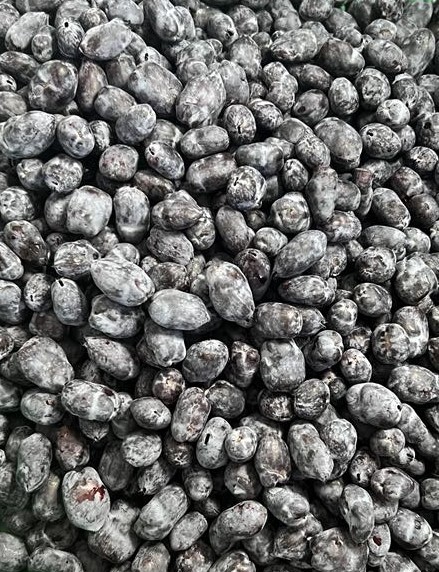
Haskap berries can exemplify both a sweet and tart taste that varies depending on the variety. The berry has a thin skin that contains a particularly juicy interior.
Nutritional Benefits
Haskap berries have been shown to have high levels of vitamin c, calcium, vitamin a, and potassium. (Alberta Haskap). Additionally, Haskap berries have been shown to have anti-inflammatory, anti-cancer, and healthy-aging properties. (Zehfus, 2020)
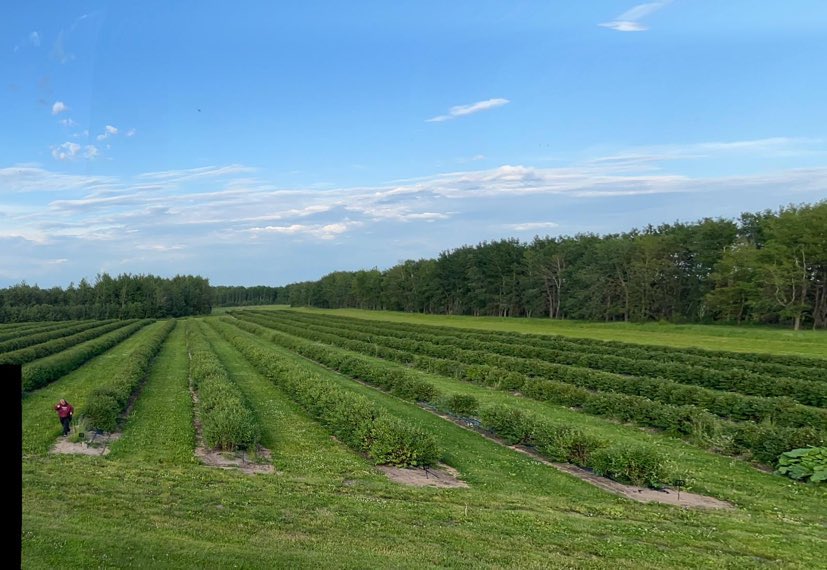
Locally Grown
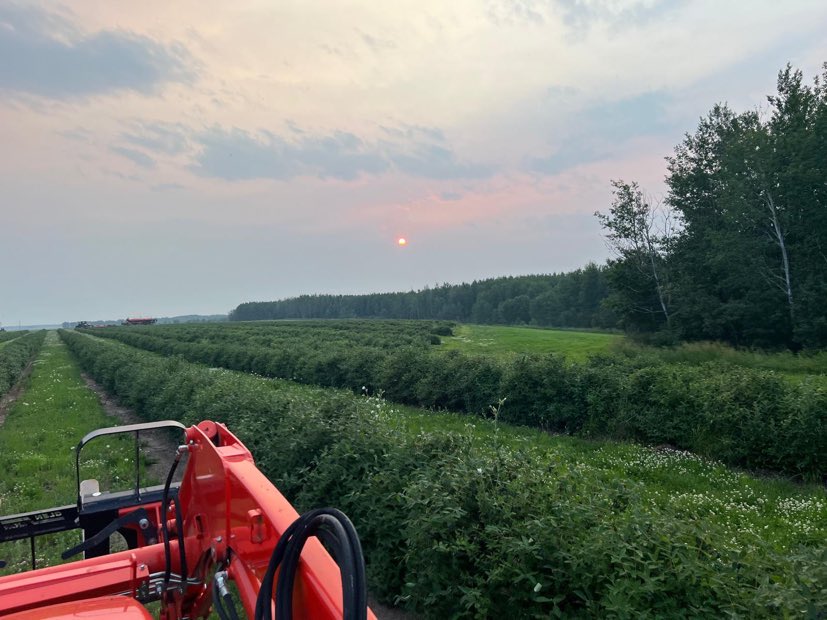
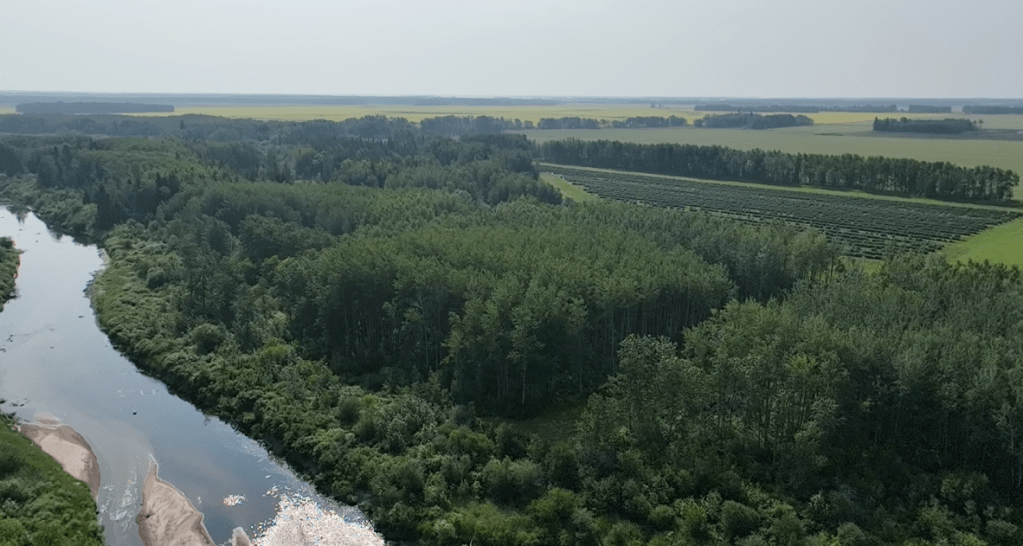
Our Haskap berries are grow on the edge of Saskatchewan’s Boreal forest.
Fruit Comparison Table (per 100g)
| Fruit | Potasssium /Mg | Calcium/ Mg | Phosphorus/ Mg | Iron/ Mg | Vitamin A/ Mg | Vitamin C/ Mg | Vitamin E/ Mg | Energy Kcal |
| Haskap | 190 | 38 | 25 | 0.6 | 130 | 44 | 1.1 | 53 |
| Pomegranate | 236 | 10 | 36 | 0.6 | 0 | 10 | 0.6 | n/a |
| Blueberry | 70 | 8 | 9 | 0.2 | 55 | 9 | 1.7 | 49 |
| Orange | 130 | 17 | 12 | 0.1 | 60 | 35 | 0.4 | 39 |
| Grape | 130 | 6 | 13 | 0.2 | 15 | 4 | 0.3 | 56 |
| Apple | 110 | 3 | 8 | 0.1 | 11 | 3 | 0.2 | 50 |
 KTK Haskap